




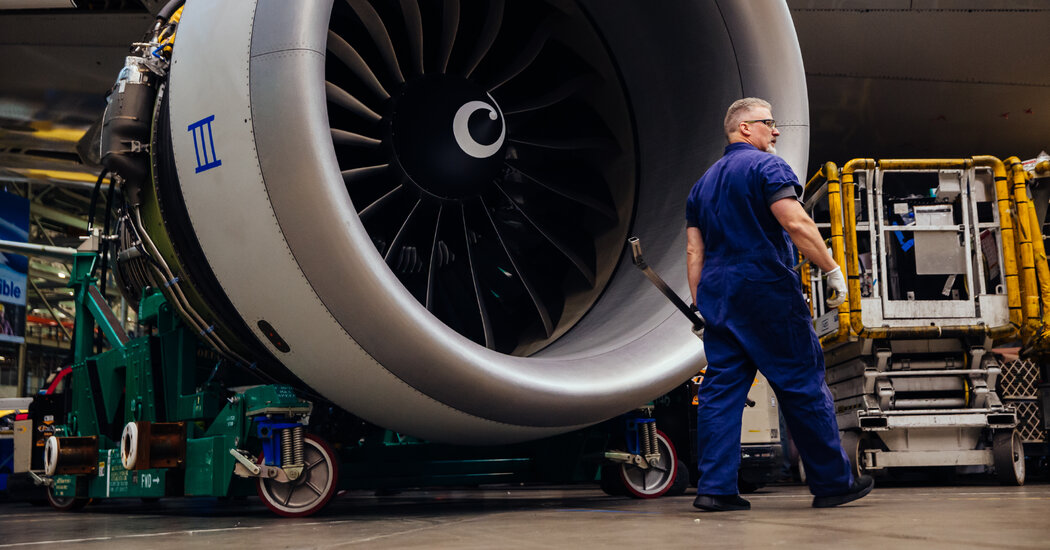
The Trump administration has started an investigation into the import of commercial aircraft, jet engines and related parts that could lead to new tariffs on top of the many it has already put in place.
According to a federal notice posted online on Friday, the commerce secretary, Howard Lutnick, started the investigation on May 1 under a provision of the Trade Expansion Act, which allows the president to impose tariffs on foreign products in the interest of national security.
President Trump has already used that authority to impose tariffs on aluminum and steel, and to start similar investigations, including one last month into semiconductors and pharmaceuticals.
As part of the new investigation, the Commerce Department said, it will seek industry input on demand for aircraft, engines and parts and whether that could be fulfilled domestically; the role that foreign suppliers play in the market; the extent to which foreign governments favor those businesses; and other issues.
Tariffs on imports could hurt the aerospace industry, which has produced one of the largest trade surpluses of any industry for years, but relies heavily on specialized suppliers that are spread out around the world. In some cases, crucial parts may be produced by only a few manufacturers or just one. The aerospace industry is expected to export about $125 billion this year, according to IBISWorld, second only to oil and gas.
“Our record of trade surpluses, job creation and innovative contributions to both air transport and national defense is the best news story for the American economy among all manufacturing sectors,” Eric Fanning, the president of the Aerospace Industries Association, said in a statement. “We look forward to engaging with the Department of Commerce to identify opportunities to strengthen our domestic supply chain while also maintaining the trade framework that has enabled our global leadership in aerospace.”
Boeing, which makes commercial airplanes, recently described the direct effects of the tariffs that Mr. Trump had imposed so far as minor, but said it was concerned about the toll they could have on its suppliers. The company’s chief executive, Kelly Ortberg, told Wall Street analysts last month that Boeing was paying 10 percent tariffs on components for wide-body jets imported from Japan and Italy, but that the company expected to recover those costs when the planes were sold.
RTX, which makes plane engines and parts, estimated last month that tariffs this year would cost it $850 million. GE Aerospace, another engine maker, said it expected $500 million in tariff costs this year.
Governments have often tried to protect and nurture their aviation industries with tariffs and subsidies. The United States and the European Union quarreled for many years over whether the other was providing unfair subsidies to Boeing and Airbus, the world’s largest makers of commercial planes. Airbus is based in France and has extensive operations in several European countries.
RECENT COMMENTS